Florence in Fall: September vs October vs November
Compare Florence in September, October and November for temperatures, rain and daylight, with clear advice on the best autumn month for you.
The short answer
For most travellers, October is the best all-round month for Florence in fall. Its typical daytime high is 21.4°C, almost all of the lingering 30°C heat has gone, and there is still more daylight than in November.
Choose September if warmth and longer evenings matter most. Choose November if you are comfortable building the trip around museums, shorter days and a greater likelihood of rain. Do not choose November solely on the assumption that it will be cheaper or less crowded: the available data does not verify prices or crowd levels.
| Month | Best for | Main compromise |
|---|---|---|
| September | Warm evenings, outdoor sightseeing and maximum autumn daylight | Heat above 30°C remains possible; rainfall is not low |
| October | The best balance of walking comfort, daylight and autumn conditions | More rain days than September; evenings are cooler |
| November | Museum-focused, flexible trips and travellers who prefer cool weather | Wettest option, shortest days and early darkness |
Compare September in detail, read the October guide, or plan a November visit.
September vs October vs November: climate and daylight
These climate figures are historical planning medians from 2016–2025, not a forecast for a particular trip. Daylight and sunset figures are for representative dates in 2026 and use local Florence time.
| Month | Median daytime high | Median night low | Median rain days | Median monthly rain | Day length around the 15th | Sunset around the 15th |
|---|---|---|---|---|---|---|
| September | 26.4°C | 16°C | 9.5 | 110.9 mm | 12 hr 33 min | 19:26 |
| October | 21.4°C | 11.9°C | 12 | 106.9 mm | 11 hr 04 min | 18:32 |
| November | 15.5°C | 7.4°C | 13.5 | 150.7 mm | 9 hr 41 min | 16:50 |
The temperature transition is substantial: the median daytime high falls by 5°C between September and October, then by another 5.9°C in November. September still has a historical median of 6.5 days above 30°C, while October has only 0.2 and November has none.
Daylight also contracts quickly. Day length decreases by about 86 minutes during September, another 86 minutes through October and 64 minutes during November. An early-September visit therefore offers a materially different sightseeing day from a late-November trip.
September: best for warmth and longer sightseeing days
September is the strongest choice if your plans emphasise walking, viewpoints and time outside. A median daytime high of 26.4°C and night low of 16°C generally require lighter clothing than the other autumn months.
However, September should not be treated as reliably cool or dry. The historical profile includes 6.5 days above 30°C, and its median monthly rainfall of 110.9 mm is actually slightly higher than October's 106.9 mm. Rain falls on fewer days than in October, but a waterproof layer still belongs in your luggage.
September suits:
- travellers who prioritise warmth and later sunsets;
- itineraries with substantial outdoor walking;
- people comfortable adjusting the pace if lingering heat occurs;
- short visits where the lower median number of rain days is useful.
September is less suitable for:
- travellers specifically trying to avoid heat;
- anyone assuming that early autumn guarantees dry conditions.
For a broader plan, see Florence in September.
October: the best balance for most visitors
October offers the clearest compromise between comfort and usable daylight. Its median daytime high is 21.4°C, with a median night low of 11.9°C. Days around mid-month provide just over 11 hours of daylight, although that declines considerably as the month progresses.
Rain is the main trade-off. October has a median of 12 rain days, compared with 9.5 in September. Its daily rain probability is 36%, so an itinerary dependent on uninterrupted outdoor weather is unnecessarily fragile.
For a first visit, October is the safest default of the three months: it avoids most of September's heat without accepting November's much shorter days and higher rainfall. Layers are more practical than dressing for a single temperature, particularly when a day combines outdoor walking with a major museum visit.
October suits:
- first-time visitors seeking the most balanced autumn option;
- travellers who find hot-weather sightseeing tiring;
- mixed indoor and outdoor itineraries;
- visitors willing to keep the order of each day flexible.
October is less suitable for:
- travellers whose priority is warm evenings;
- itineraries that leave no alternative for a wet day.
Read the full Florence in October guide, or compare autumn with the rest of the year in the best time to visit Florence.
November: best for a museum-led, weather-flexible trip
November is markedly cooler and wetter. The median daytime high is 15.5°C, the median night low is 7.4°C, and the apparent temperature is typically 13.6°C in the afternoon and 10.4°C in the evening.
It is also the wettest of the three autumn months in the historical profile, with 150.7 mm of median monthly rainfall and 13.5 rain days. The daily rain probability reaches 45%, while cloud cover is substantially higher than in September or October.
Short daylight is equally important. Around mid-November, Florence has about 9 hours 41 minutes of daylight and sunset is around 16:50. Schedule viewpoints and other outdoor priorities while there is daylight rather than leaving them automatically until the end of the day.
November suits:
- travellers happy to make museums the fixed points of the itinerary;
- people who prefer cool conditions to lingering heat;
- slower trips with enough flexibility to rearrange outdoor plans;
- visitors comfortable carrying proper wet-weather clothing.
November is less suitable for:
- short trips dominated by outdoor sightseeing;
- travellers who value long evenings in daylight;
- rigid itineraries with no rain alternative.
November may feel more distinctly like late autumn, but no verified crowd or accommodation-price data is available here. See Florence in November for focused planning.
How to plan for autumn rain
Florence is compact enough to cross on foot, but that does not remove the friction caused by wet weather. Rain matters most when an itinerary depends on viewpoints, long walks or several outdoor landmarks in a fixed sequence.
A more resilient approach is to:
- Choose one indoor anchor for each day. The Uffizi Gallery is a major museum option; confirm current admission arrangements and book through the official Uffizi website when needed.
- Keep outdoor priorities movable. Use the clearest part of the day for places such as Ponte Vecchio or Piazzale Michelangelo rather than assigning them to an inflexible time several days ahead.
- Protect the essentials. A waterproof outer layer, water-resistant footwear and protection for phones or documents are more useful than relying on a dry monthly average.
- Avoid overloading a short visit. A wet spell creates more disruption when every day is packed. If your pace is deliberately gentle, consider the slow three-day Florence itinerary.
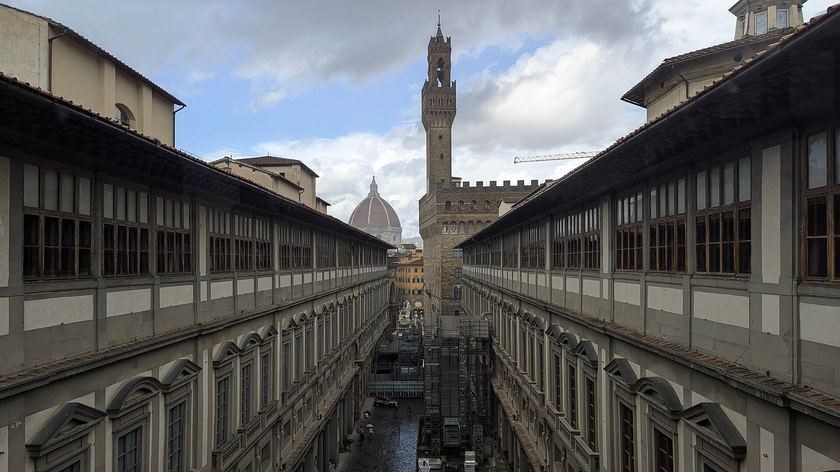
For Uffizi visitor information, use the Uffizi Gallery place page and confirm current opening hours, prices and booking requirements on its official site.
Which autumn month should you choose?
Choose September if…
You want the warmest conditions and longest days, and you do not mind the possibility of temperatures above 30°C. It is the most suitable autumn month for an outdoor-heavy itinerary, but not a guarantee of dry weather.
Choose October if…
You want the best overall compromise. It is cooler than September, brighter and less wet than November, and well suited to a first trip mixing museums with walking.
Choose November if…
You prefer cool weather and are happy to prioritise indoor attractions. It works best when your schedule can absorb rain and when early darkness will not undermine your plans.
If you are still deciding how long to stay, compare realistic trip lengths.
Frequently asked
What is the best fall month to visit Florence?
October is the best overall choice for most visitors. Its median daytime high is 21.4°C, almost all days above 30°C have disappeared, and it retains more daylight with less rainfall than November.
Is Florence still hot in September?
September is the warmest autumn option, with a median daytime high of 26.4°C and a median night low of 16°C. The historical profile includes 6.5 days above 30°C, so lingering heat remains possible.
Is October or November rainier in Florence?
November is the wettest of the three months in the historical data. It has a median of 13.5 rain days and 150.7 mm of monthly rainfall, compared with 12 days and 106.9 mm in October.
How much daylight does Florence get in autumn?
Around the representative 15th of each month in 2026, day length is 12 hours 33 minutes in September, 11 hours 4 minutes in October and 9 hours 41 minutes in November. Daylight also decreases substantially within each month.
Is November quieter in Florence?
No verified crowd data is available in the Fact Pack, so a quieter November should not be assumed. Choose it for cooler weather and a museum-led itinerary rather than relying on unverified crowd or price claims.