Oltrarno: Is It the Best Area to Stay in Florence?
Should you stay in Oltrarno or north of the Arno? Compare quieter evenings with bridge crossings for the Uffizi, Duomo and central Florence.

The short answer
Oltrarno is a strong base for couples, repeat visitors and travellers who prefer quieter evenings to having Florence’s headline sights immediately outside their accommodation. It is less convenient for a first visit dominated by the Uffizi, Duomo and repeated sightseeing north of the Arno.
Florence is compact enough to cross on foot, so staying in Oltrarno does not isolate you. The trade-off is repetition: on museum-heavy days, you may cross the river in the morning, return to your accommodation, and cross again for later plans. Choose the historic centre north of the Arno if minimising that friction matters more than evening atmosphere.
Oltrarno versus the historic centre
| Stay in Oltrarno if… | Stay north of the Arno if… |
|---|---|
| You prefer quieter evenings | This is your first visit and major sights are the priority |
| You are visiting as a couple and want separation between sightseeing and downtime | You want the simplest base for Uffizi and Duomo days |
| You have visited Florence before | You expect to return to your room during the day |
| You do not mind crossing a bridge for central sightseeing | Repeated bridge crossings would become tiring or inconvenient |
The decision is therefore less about whether Oltrarno is “central” and more about which side of the river best matches your daily plans.
Who should stay in Oltrarno?
Couples
Oltrarno suits couples who want to spend the day sightseeing but prefer to return to a less sight-focused base in the evening. Florence’s compact scale keeps the main centre accessible on foot, while the river creates a useful psychological break between daytime visits and evening downtime.
However, couples planning tightly scheduled museum days may value convenience more. If both the Uffizi and Duomo dominate your itinerary, staying north of the river reduces unnecessary backtracking.
Repeat visitors
Repeat visitors are often better placed to accept Oltrarno’s trade-off. If you have already covered the principal Renaissance sights, you may not need to cross the river several times each day. A base around Santo Spirito can then make more sense than paying for proximity to attractions you do not plan to revisit repeatedly.
Travellers seeking quieter evenings
Oltrarno is the better candidate if evening calm is a priority, but do not treat the neighbourhood label as a guarantee. Conditions can vary by individual street and building. Check recent accommodation reviews for noise rather than assuming every Oltrarno address will be quiet.
The main drawback: crossing the river for sightseeing
The Uffizi and Duomo are the key test. If your itinerary concentrates on these sights and other stops in the historic centre north of the Arno, each return to Oltrarno introduces another bridge crossing.
That is manageable in a compact, walkable city, but it still affects how a day feels. The inconvenience is greater if you:
- like returning to your room between visits;
- prefer not to walk more than necessary;
- have several consecutive days focused north of the river;
- are travelling with anyone for whom repeated walking is difficult.
A common planning mistake is to judge an Oltrarno hotel only by its apparent closeness to the river. Also consider where the nearest practical crossing sits relative to the accommodation and the sights on your itinerary. Without verified accessibility information, travellers with limited mobility should confirm step-free routes and property access directly.
Use Ponte Vecchio as your orientation point
Ponte Vecchio is the clearest connector landmark when comparing the two sides of Florence. The bridge crosses the Arno and is still lined with goldsmiths; it is also the only Florentine bridge to have survived 1944.
For accommodation planning, use it as an orientation point rather than assuming it will always be your shortest route. An Oltrarno stay positioned conveniently for Ponte Vecchio can make central sightseeing feel straightforward. A property less conveniently aligned with a crossing may add more walking than a map first suggests.
Is Santo Spirito the right part of Oltrarno?
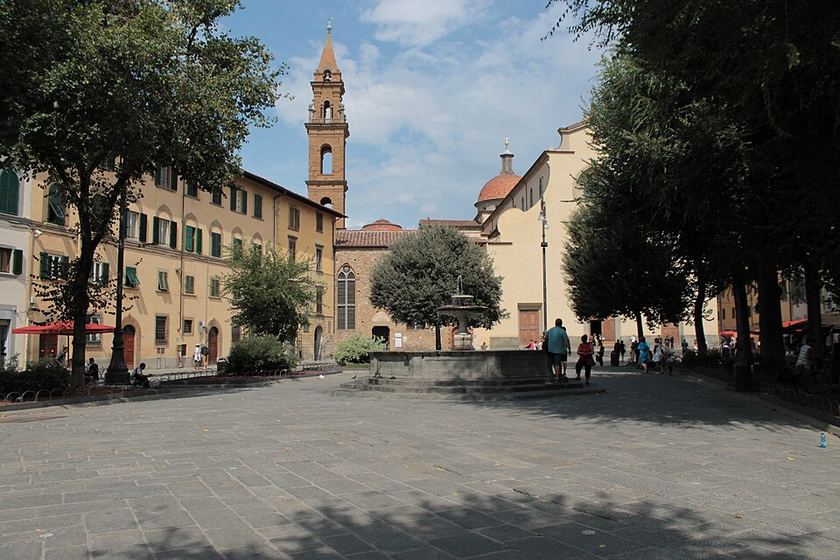
Santo Spirito is the most relevant Oltrarno planning area for travellers seeking the quieter, more local-feeling alternative described here. It is particularly worth considering for couples and repeat visitors whose trip is not organised entirely around the Uffizi and Duomo.
The same caution applies: assess the exact accommodation, not just the area name. Recent noise reviews, building access and the route to a bridge can change whether a particular stay delivers the advantages you expect.
When the historic centre is the better choice
Stay north of the Arno if this is a short first trip centred on major museums and landmarks. It is also the more practical choice when you want to minimise walking, expect midday room breaks or have an early departure that makes additional movement undesirable.
Oltrarno can be a poor trade if you choose it for atmosphere but spend nearly every waking hour north of the river. In that case, the quieter base may not compensate for repeated crossings.
A simple way to decide
Sketch your itinerary by half-day and mark which side of the Arno contains each priority. If most of your planned visits are around the Uffizi, Duomo and the historic centre, stay north. If your plans are more flexible and you value quieter evenings, Oltrarno is likely the better base.
For many first-time visitors, the historic centre wins on convenience. For couples and repeat visitors who are comfortable walking, Oltrarno often offers the more appealing balance.
Frequently asked
Is Oltrarno a good place to stay for a first visit to Florence?
Oltrarno can be a good choice for a first visit if you prefer quieter evenings and are comfortable walking. If most of your itinerary focuses on the Uffizi, Duomo and sights north of the Arno, the historic centre is more convenient.
Is Oltrarno too far from the Uffizi and Duomo?
Florence is compact enough to cross on foot, but an Oltrarno base adds repeated bridge crossings on sightseeing days north of the Arno. The inconvenience matters most if you return to your room during the day or want to minimise walking.
Who is Oltrarno best for?
Oltrarno particularly suits couples, repeat visitors and travellers prioritising quieter evenings over immediate access to the principal sights north of the river.
Why does proximity to Ponte Vecchio matter when choosing a hotel?
Ponte Vecchio is a useful connector landmark when comparing accommodation on either side of the Arno. Check the exact route from a property to a practical bridge rather than judging it only by the neighbourhood name.
Should I stay in Oltrarno or Florence’s historic centre?
Choose Oltrarno for quieter evenings and a base separated from the main sightseeing zone. Choose the historic centre if convenience for the Uffizi, Duomo and daytime room breaks is the priority.