Florence With Limited Mobility: Routes, Museums and Practical Tips
Plan Florence with limited mobility: realistic sightseeing clusters, access checks for the Uffizi and Duomo, and honest limits on step-free routes.
The realistic answer
Florence is described as compact enough to cross on foot, but compact does not mean step-free or low-effort. The available evidence does not verify pavement condition, gradients, dropped kerbs, accessible entrances or working lifts. Travellers with limited mobility should therefore plan around small central clusters and confirm access directly with each venue.
The most practical priorities in this guide are:
- Uffizi Gallery and Ponte Vecchio together: their coordinates place them close to one another, limiting the need for a longer transfer.
- Florence Cathedral as a separate focus: add it to the same day only if your mobility and energy allow.
- One major indoor visit per day: a museum visit plus transfers and waiting can be demanding even when the map looks compact.
Do not rely on an unverified “accessible Florence” route. No continuous step-free itinerary can be confirmed from the available information.

What the historic centre means for limited mobility
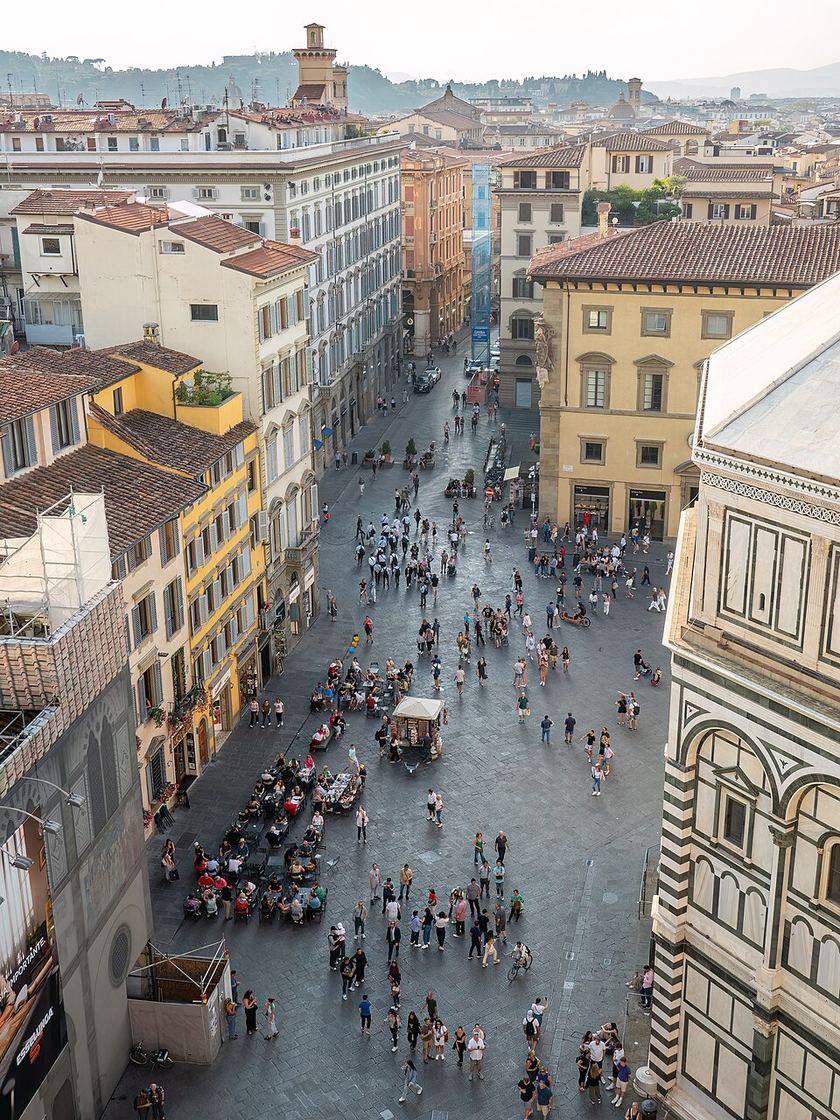
Florence’s compact centre reduces geographical spread, but it does not establish that the route between sights is smooth, level or obstacle-free. This guide cannot verify where cobbles, uneven paving, kerbs, steps or steep sections occur.
That uncertainty changes how you should plan:
- Treat every outdoor connection as part of the day’s effort. A short-looking transfer may still be tiring for someone using a wheelchair, walking aid or frequent rest stops.
- Avoid building a day around continuous walking. Choose a main venue and regard nearby landmarks as optional additions.
- Check both the building and the approach. A venue may have an accessible entrance without the most obvious public route being suitable for you.
- Keep a fallback plan. If an entrance, lift or route is unavailable, be prepared to shorten the day rather than forcing the complete itinerary.
Ponte Vecchio is a bridge as well as a landmark, so it should be treated as a deliberate route decision rather than an automatic connection. Its slope, paving and step-free approach are not documented in the Fact Pack.
Which major places should you research?
| Place | Best planning role | What to confirm before visiting |
|---|---|---|
| Uffizi Gallery | The main museum visit; geographically sensible to pair with Ponte Vecchio | Step-free entrance, lift availability and coverage, accessible toilets, seating or rest options, companion arrangements and any temporary access changes |
| Ponte Vecchio | A nearby outdoor landmark or crossing after the Uffizi | Surface condition, gradients, kerbs, suitable approaches and temporary works affecting the route |
| Florence Cathedral (Duomo) | A separate central focus or an optional addition for a stronger traveller | Accessible public entrance, which areas can be reached without steps, lift provision where relevant, queue arrangements and temporary restrictions |
These are questions to ask, not confirmed facilities.
Uffizi Gallery
The Uffizi Gallery houses the Medici collection of Renaissance painting in Vasari’s 16th-century administrative building. It is the clearest choice if you want one major museum visit.
A historic building should not automatically be assumed accessible or inaccessible. Check the official site shortly before your visit for the current entrance procedure and lift status. If the accessibility information does not answer your specific needs, contact the museum directly before booking.
Because the Uffizi and Ponte Vecchio are close geographically, they form the most coherent two-place cluster in this limited set. Even so, make the bridge optional after the museum rather than treating both as fixed commitments.
Ponte Vecchio
Ponte Vecchio is an outdoor landmark and a functional crossing. There is no verified information here about its paving, gradients, kerbs or step-free approaches.
Consult the City of Florence website for current municipal information and route disruptions. If you cannot confirm that the approach suits your mobility, view the bridge as a possible extra rather than the link on which the rest of your itinerary depends.
Florence Cathedral
Florence Cathedral stands in Piazza del Duomo. The available data does not identify an accessible entrance or state which parts are step-free.
The cathedral is best planned as its own priority. Check the official site for current accessibility guidance, and be precise about the part you intend to visit. Do not assume that access information for one area applies to every area associated with the cathedral.
Two lower-strain ways to organise your sightseeing
Plan A: Uffizi first, Ponte Vecchio optional
Make the Uffizi the day’s fixed visit. Afterward, decide whether you have enough energy for Ponte Vecchio. Their close geographical relationship keeps the plan more contained than moving between several separate priorities.
This suits travellers who want Renaissance art but need flexibility. The bridge can be dropped without losing the main purpose of the day.
Plan B: Florence Cathedral as the sole anchor
Build a separate outing around Piazza del Duomo and the cathedral. Only add another attraction if access has been confirmed and your energy remains good.
This is the safer choice for travellers who tire quickly, need frequent rests or cannot risk an uncertain sequence of entrances and outdoor transfers.
Should you combine all three?
The three places are centrally located, but that does not make them an easy limited-mobility day. Combining a major museum, a cathedral visit and a bridge crossing may become rushed or overly tiring once queues, entrances and surface conditions are considered.
If you have more than one sightseeing day, splitting the Uffizi–Ponte Vecchio cluster from the Duomo gives you more room to respond to fatigue or access problems.
What to verify before booking
Official accessibility information can change, particularly where lifts or alternative entrances are involved. For each venue, confirm:
- the exact step-free entrance and whether it differs from the main entrance;
- whether advance notice or staff assistance is required;
- which floors or visitor areas a lift reaches;
- whether any lift or accessible route is temporarily unavailable;
- accessible toilet provision;
- seating and rest opportunities;
- arrangements for a companion or carer;
- how ticketing and queues work for visitors unable to stand for long periods.
Opening hours and prices are not available in the verified information for this guide. Check them on the official venue sites rather than relying on an old itinerary.
Common planning mistakes
Assuming “walkable” means accessible
Florence’s compact scale is useful for reducing overall spread. It says nothing by itself about paving, kerbs, slopes, steps or accessible entrances.
Choosing too many fixed stops
A tightly scheduled list leaves little room for rest or for finding an alternative entrance. Set one priority and make nearby places optional.
Relying on a lift without checking its status
This guide cannot verify whether any venue lift exists, reaches all visitor areas or will be operating on your date. Confirm directly with the venue.
Treating Ponte Vecchio as an effortless connection
A bridge can be both a sight and a source of route friction. Do not make the rest of the day depend on crossing it until its approaches and surface are suitable for your needs.
Bottom line
For Florence with limited mobility, prioritise certainty over the number of sights. The Uffizi and Ponte Vecchio make the most logical central pairing, with the bridge kept optional. Treat Florence Cathedral as a separate anchor if stamina is limited.
Most importantly, use the official sites to confirm entrances, lifts and temporary restrictions. The available evidence supports a compact itinerary, but it does not support claims that any route or venue is fully step-free.
Frequently asked
Is Florence accessible for wheelchair users?
The verified information does not support a city-wide accessibility rating. Florence is compact, but pavement condition, kerbs, gradients, entrances and continuous step-free routes have not been confirmed. Check each venue and route individually.
Which Florence sights are easiest to group with limited mobility?
Their coordinates place the Uffizi Gallery and Ponte Vecchio close together, making them the most logical pair in this guide. Keep Ponte Vecchio optional in case the museum visit or outdoor route takes more energy than expected.
Can I visit the Uffizi, Ponte Vecchio and Duomo in one day?
It may be overly tiring. Although all three are central, the day would combine a major museum, a cathedral visit and an outdoor bridge crossing. Splitting the Duomo from the Uffizi–Ponte Vecchio cluster is the lower-strain plan.
Is there a verified step-free route through central Florence?
No step-free route is verified in the available information. Surface conditions, kerbs, gradients and approaches must be checked through official information or directly with the relevant venue or municipality.
What should I check with Florence museums before visiting?
Confirm the precise accessible entrance, whether advance assistance is needed, which areas lifts reach, current lift status, accessible toilets, seating and queue arrangements. Opening hours and prices should also be checked on the official sites.